Tuesday, 6 January 2015

Objectives

   Feste is an interesting character, because he doesn't have a clear character objective. He lives in the moment, and is not concerned about the future or the past. He roams around between two houses, and seems to be only character who is free from obligations. In many of the scenes he makes fun of the characters, not straight forwardly insulting them, but playing around with them and showing that he knows more than others would think. And he does; Feste seems to have knowledge over the other characters much more than he should and he is almost a mythical character that way.

2.4
   In this scene Orsino and Viola have a discussion about love, especially the connection between Orsino and Olivia, but also Cesario's mysterious love(that actually is Orsino). Feste doesn't have a huge role in this scene, he comes in to amuse Orsino by singing a song, and notices the chemistry between Orsino and Viola. He then mocks Orsino for his quick changes in love interests and his melancholy mood before leaving the scene.

  •     2.4.49 "Are you ready, sir?"
    • This is Feste's first line in this scene, after entering and listening to Orsino's long speech about the song and how it tells a simple truth about love. I feel Feste might have seen this as Orsino's poetic pleading and his line could be said in a sarccastical way as in "Are finally done with your oh so deep thoughts???". But it also shows Feste's respect and knowledge of his position as a lower cast than Orsino. 
  • 2.4.69 "No pains sir, I take pleasure in singing, sir."
    • Feste truly lives in the moment and enjoys what he does. But during singing the song, he also has seen the connection between Orsino and Cesario, and I feel the pure sight of this is payment enough for Feste. This line is very much starting to play around with Orsino.
  • 2.4.73 "Now the melancholy god protect thee, and the tailor make thy doublet of changeable taffeta, for thy mind is a very opal. I would have men of such constancy put to sea, that their business might be everything and their intent everywhere, for that's it that always makes a good voyage of nothing. Farewell."
    • This whole line is Feste mocking Orsino and his melancholic over-the-top emotions and the fact that Orsino says he loves Olivia, but then has this very intimate moment with Cesario. 

4.2
   In this scene Malvolio has been locked up in a dark rook and Maria asks Feste to pretend to be a priest and play around with Malvolio. Feste goes on to make Malvolio believe that he is insane and mislead him. Yet, Sir Tobias and Maria get nervous of this prank and send Feste back to Malvolio, as both the priest and as himself to hear what Malvolio wants. 
  • 4.2.4 "Well, I’ll put it on, and I will dissemble myself in ’t, and I would I were the first that ever dissembled in such a gown.I am not tall enough to become the function well, nor lean enough to be thought a good student, but to be said an honest man and a good housekeeper goes as fairly as to say a careful man and a great scholar. The competitors enter."
    • Maria has asked Feste to put on the disguise, which, as saying this line, Feste is putting on. He is already making fun of the situation, by saying that he wished he'd be the first to pretend to be a priest. He also makes fun of himself, by stating that he isn't really the stature to be a priest, but as he is mostly an honest man, he should be able o give out that vibe.
  • 4.2.12 "Bonos dies, Sir Toby. For, as the old hermit of Prague, that never saw pen and ink, very wittily said to a niece of King Gorboduc, “That that is is.” So I, being Master Parson, am Master Parson. For, what is “that” but “that,” and “is” but “is”?"
    • This is Feste sort of getting into character. For the Clowns at that time, actors job was included into their repertoire, and so this might be sign that he has done some acting before. He says this line in the character of Sir Topas and playing around with logical analysis.
  • 4.2.18 "What ho, I say! Peace in this prison!"
    • Now Feste is getting full on into character, playing around with the idea that priests must go to the house of peace, aka hospital, to the sick, and he is going to Malvolio who is insane, but the plpace he is in is indeed a prison of sort.
  • 4.2.21 "Sir Topas the curate, who comes to visit Malvolio the lunatic."
    • Introduces himself to Malvolio
  • 4.2.25 "Out, hyperbolical fiend! How vexest thou this man! Talkest thou nothing but of ladies?"
    • Malvolio has asked for Topas to go to Olivia, and Feste is now saying for him to basically go to hell and judging him for only thinking about women and not the 'obvious' presence of the devil. 
  • 4.2.31 "Fie, thou dishonest Satan! I call thee by the most modest terms, for I am one of those gentle ones that will use the devil himself with courtesy. Sayest thou that house is dark?"
  • 4.2.36 "Why, it hath bay windows transparent as barricadoes, and the clerestories toward the south-north are as lustrous as ebony. And yet complainest thou of obstruction?"
  • 4.2.42 "Madman, thou errest. I say, there is no darkness but ignorance, in which thou art more puzzled than the Egyptians in their fog."
    • Now Feste has very much started to play around with Malvolio, by making him believe, that the room Malvolio is in, is actually full of light and windows, and so the darkness Malvolio sees is simply he being insane. Feste almost wants to make Malvolio more insane, or to believe he is. 
  • 4.2.49 "What is the opinion of Pythagoras concerning wildfowl?"
  • 4.2.53 "What thinkest thou of his opinion?"
  • 4.2.56 "Fare thee well. Remain thou still in darkness. Thou shalt hold the opinion of Pythagoras ere I will allow of thy wits, and fear to kill a woodcock lest thou dispossess the soul of thy grandam. Fare thee well."
    • This is Feste setting a trap for Malvolio by asking him questions. Malvolio does answer the questions right in a way, but Feste makes him seem as if he is wrong and also calls him stupid at the same go. He then leaves, feeling that he has succeeded in his mission to fool Malvolio.
  • 4.2.62 "Nay, I am for all waters."
    • After coming back to Sir Toby and Maria, he is basically saying he is satisfied with his performance, perhaps even gloating a little.
  • After Sir Toby asks Feste to go back, Feste sings a song as himself to Malvolio, to show Malvolio who he is but also to annoy him.
  • The rest of the scene Feste plays around with Malvolio by switching between himself and playing the priest to make fun of him, but also promises to get Malvolio the ink and paper he asked for. This is showing mercy to poor Malvolio, but also listening to Sir Toby's wishes to not see this prank meet it's end by it's own.
5.1.
  This is the last scene of the play. In this scene everything comes together, all the secrets are told and the story comes to an end. Fabian and Feste open the scene by wanting to read the letter that Malvolio wrote for Olivia, but Feste doesn't them have the pleasure. He also talks iwith Orisno in the beginning, playing around with him, but also explaining his position as a fool and get some money off of him. Later, Feste comes back in to read the letter Malvolio wrote to Olivia, humiliating him completely. 

Monday, 5 January 2015

5.1.15 - ACTING ON CAMERA

"The stage is like an operation with a scalpel knife and acting in front of a camera is like an operation with a laser."

We started talking about type casting and film acting in a bit more detail today. Film acting is mainly naturalistic, after the US became the biggest producer of films in the 1940's. Yet, there is a lot more into it, than just naturalistic acting, for example cheating your body towards the camera.

   Types casting, as bad as it sound, is a part of being an actor. This is when you are cast on the base you look like, and it often might follow you throughout your career. This is because people have certain visual expectations of certain characters and so it is important for film makers to withhold that, to meet the audiences expectations(of course there are exceptions). By type casting, the film maker will also be quite sure of the fact that the actor will do their part well, since they have done something similar before. 
  
   Continuity is making sure that the shots of the one scene do not look different  but follow it continuously. For example, if a pen is on the table, when taking another shot the pen should be on the same spot. 
   We also learned about the different kind of shots there is to take of an scene. The first one, is the Master shot, also known as the Establishing shot. This shot shows the audience where we are, who is in the scene, but also is good for editing, since it shows the scene as a whole and is a place look back to when trying to get continuity right in the more detailed shots. In this shot, you can either see the actors from head to toe, or most of them. 

   Shot A and B show two different kind of shots, focusing on either actor. The first one is called Medium shot, or sometimes Over the shoulder medium shot. This shot usually focuses on on side of the scene, showing the reactions and expressions of a certain actor. The extreme of this is the Close up, where the shot is focused on one actor and framed very very close to their face to see the smallest of changes in their expressions. The Cover, is called the basic shots needed to take for the editing to have a good amount of footage to work on.
  
 TYPE CASTING SHEET
    
   We started also looking at our own type casting. So, Andy divided us into groups and gave a sheet to fill out with our partners. The task was to figure out, what we could be typecast as , after answering a series of questions:
  • What is your full name?
  • Where are you from?
  • Tell us something funny or embarrassing about your childhood
  • What is the difference between acting for stage and acting for camera?
  • What is your favourite film and why?
  • Tell us a secret about yourself...
This is how I was typecast as:
  • What is their age range? : 18-25
  • City or Country?: City
  • Upper class or working class: Working Class
  • Where in the world?: Anywhere
  • What roles could they play?: Lawyer, therapist, teacher, a really troubled person who builts up their emotions before exploding
  • My reaction: I do not really see myself as a lawyer, but I have been typecast before as a therapist and a teacher. I feel that I have been often typecast with caring and somehow motherly characters. I would have wanted to know details about where int he world I could have come from, since the answer I received wasn't very specific! Also, I thought I could have passed as a little bit younger than 18. 
  • Anything else? one of my partners said this as a reason why I could come from anywhere: "you have a certain openness that makes everyone be comfortable around you, like someone who travels the world."

Tuesday, 30 December 2014

THE FOOL - Research

  I got cast as Feste, who is more commonly referred to as the fool in the play. I thought it would be helpful for me to do some research on the jester's and fool's of Shakespearean time, what their job was and what was their place in the society. Hopefully, this will help me with my character development, but also just helping me to construct a coherent image of Feste's life.

THE FOOL

  • Court Jesters date back before the Medieval era 
  • Job was to bring smile to the face of the master and entertain
  • Female fools were rare, though have been mentioned(Lucretia the Tumbler and Jane The Fool)
  • Only one who really had freedom of speech - could say anything to the king/queen, because of their eccentricity and state as the fool, who as a job mocks people
  • Some achieved considerable fame, but many were common in court
  • often worked also as actors or playwrights
  • "Natural fool" was someone who was born with a foolish nature, in other words they were mentally disabled. Society found mental illness(madness) entertaining, and if one was clever or lucky enough to use their simplicity as a advantage, they  could make a living out of it. 
  • "Artificial Fool" purposely acted simple, odd, or eccentric to entertain and sometimes even to indirectly to give advice.  
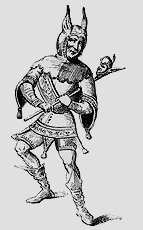
  • The first costumes of court fool show their hats to have had ears of an ass, the tail being added later. This then moved on to colourful and humorous attire. 
  • Feste was originally probably played by Robert Armin, a goldsmiths turned actor and author, who is listed as one of the 'principal actors' in Shakespeare's plays. He also wrote three jest-books.

Friday, 19 December 2014

19.12.14 - Konstantin Stanislavski

"As actors we use our imagination to visualise everything from the circumstances of the play, what we want, how we will achieve it, our characters past to the events of the play"

Given Circumstances

  • Information
    • Script
      • Stage Direction
      • Character Interaction
      • Text
        • What people say
        • What people don't say
    • Research
    • Director
Imagination
  • Passive imagination - seeing ourselves from the audience point of view
  • Active imagination - seeing yourself through your own(actor's) eyes
    • Stanislavski's aim for an actor
    • Actors must use the imagination actively so we can experience " I am being" the character
Exercises
  1. We started by walking around the room in neutral, opening ourselves to what ever we would have to imagine. Andy would then describe a place for us we would adapt ourselves into that situation and imagine ourselves in those places. The three places describes were a church wedding, walking on the downs and busy London rushing to see your mother. All of these different situation were very different for me, since I have different connections to each scenario. Church one made me feel a bit imitated and very awkward after it was told we were at a wedding we weren't invited to. I am not religious, so I felt out of place in a church, but still respectful. I could imagine all the art and beautiful architecture, but also felt that I shouldn't be there. This exercise was very much about imagination and training yourself to imagine different situation, but also connecting them with your past experiences.
  2. Second exercise was much about concentration and how quickly imagination can be broken, but also created. We were told to imagine ourselves in our kitchen cooking. We had to imagine the space, the table tops and cupboards . Then, Siou gave us a math equation to solve and suddenly, the imaginative kitchen disappeared and the math problem appeared in front of me. Then we had to go back to that kitchen, but it was harder now because we had been distracted. 
  3. At the end of the class we did a exercises we did multiple times last year. In this exercise two people were chose and each were given a different objective and then they had to improvise a scene with their objective in mind, but not show the other person what the objective is. As an audience, we had to try and figure out what the objectives were. This really trained us how to use the objectives to create character and emotions, without blatantly saying THIS IS WHAT WANT, but be more subtle about it
Units & Objectives
  • Units are specific points in the play that each contain an individual motive for the character 
    • Helps the actor reference each emotions and create character
  • Objectives are goals that the character wants to achieve
    • action oriented

Wednesday, 17 December 2014

17.12.14

   Today we were working with the 1st year on the first scene and especially the opening monologue of Orsino's. We did a lot of similar exercises we have done with the 2nd years before, such as reading the monologue line by line together as a group and then each choosing four words from their line to define it. This exercise helps to find meaning in the monologue, by identifying the important words and creating a mood for it. We also realized, that the first few lines basically define the entire play: If music be the food of love, play on, give me excess of it, that surfeting The appetite may sicken and so die. The play is pretty much about love, music and the excess of love.

After this we started to experiment and play around with the set of the beginning. We started by simply walking around the room and as Siou would clap her hands, everyone would go on their tippy toes breathing in and on the out breath fall into a direction and keep walking, This was to declare the momentum and explore the release that the monologue sort of has. Then, we changed it to simply fall to the ground and start to say the poem in unison.
 Orsino is very much a person of free love and we all agreed he probably has had and still has multiple lovers, and so the beginning could be some sort of a harem type of set, where everyone is laying around with each other, relaxing and enjoying their times. We were told to use the first three lines and change positions between each lines to create different connections with the people around us. At first, it was hard for people to be so close each other, but soon everyone started to relax, and I felt quite connected with the group.

Friday, 12 December 2014

Assessment week Research

Shakespeare Research – Twelfth Night


The hyperlinks will give you a first source for the answers to the questions.
When was Twelfth Night written? What else was happening around this time? Who was in power in England? What do you know about this ruler?
The play 'Tweltfh Night' was believed to be written in 1601-1602 and commissioned for entertainment to close off the Christmas season, also known as the twelfth night, where the play got its name. The play was written near the end of Elizabethan era, meaning that the person in power at this time was none other than Elizabeth I, also known as The Virgin Queen. At this time, England was still very much a conservative kingdom, meaning that Elizabeth was constantly been pressured to marry. Instead, she used being single as an advantage; European monarchs who were hopeful to marry this fine lady were less of a threat. This way Elizabeth wouldn't also face the danger of dying because of childbirth, but also not lose her authority to her husband. Yet, it was said that the queen was walking on a very thin line, creating tensions between the numerous rivaling suitors. After rejecting the Spanish Kings, Philip Iis, proposal, Spain and England became rivals themselves, ending in war between these countries in the late 1580's.


What is the alternative title of the play? Why does it have two titles?
The play got its name Twelfth night for being commissioned to be performed on the 12th night of Christmas, ending the Christmas season. The other name this play is known as is 'What you Will' which might have been the original or Shakespeare's own title to the play. It is believed that it was changed to 'Twelfth Night', because at the time there was a another famous play called What You Will, which would have created confusion and separate from the John Marston's play. Another reason for two titles might have been the simple fact that during the Elizabethan era, subtitles were very fashionable.

What are the main themes of the play?
The main themes of the play are duality, disguises, gender, and love – especially what it thrives us to do and see.
The three first themes tie in together pretty well, and are often used to strengthen each other. You can see these themes especially in the character Viola, who pretends to be a man called Cesario to survive in Illyria and to work for Orsino. The fat that Viola lives as a man, and even has Olivia fall in love with her, brings out the question of gender and representation, but also disguise, themes that are found in Shakespeares other plays as well(e.g. As You Like It and Merchant of Venice). This brings out a certain homoerotic messages from the play, that aren't actually that subtle or rare. There is obvious affections from Orsino towards Viola in her male disguise, but also Viola Twin brother and Antonio have a connection that feels like something more than just connection between friends. Sebastian and Viola as twins also bring the duality out in the play, there is also references to darkness and light, and some characters, such as Malvolio(puritan) and Feste(the fool) contrast each other.
Disguise is also a reoccurring theme, obviously with Viola dressing up as a man, but also characters fooling others(mainly Malvolio) by pretending to be someone they are not. For example Feste dressing up as a priest to fool Malvolio and Maria writing a letter in Olivia's handwriting to play a trick on, you guessed it, Malvolio.
Love is an obvious theme, but I feel that in this particular play it isn't just simple as everyone falling in love, but rather the love being unrequited. It seems that every character has some kind of connection with this, by Orsino loving Olivia but Olivia loving Cesario, but Viola instead is in love with Orsino. This is a perfect example of a love triangle. Other desperate lovers are Malvolio and Sir Andrew, who both want the affection of Olivia, but also Antonio, who obviously has feelings for Sebastian, who instead ends up with Olivia.
What are the main differences & similarities between Shakespeare’s Tragedies and Comedies?
The main difference of Tragedies and Comedies is found from the names; tragedies end in death and sorrow, where as comedies end with pretty much everyone of the main characters getting happily married. In both genres the stories often focus on love, or have some subplot about love. The difference in these is that in tragedies, it is usually forbidden because of rivaling families or a feud between friends, and often ends badly, where as in comedies the fight for love ends happily and isn't as tragic, but rather funny in most cases. Still, both styles contain an element of humour and sadness, but the balance of these moods vary. Also, comedies often include some sort of trickery, often harmless and jokes-like, but tragedies use deception to gain power and use murder as a tool.
Name one of the characters in the play and write short character profile.
MALVOLIO

Malvolio might seem like a minor character at first, only bringing a little amusement to the love triangle of Viola-Olivia-Orsino, but as the play gies in, he grows more interesting.
Malvolio is the steward or main servant of Olivia's household, and is often seen as the main antagonist, who is tricked multiple times by other characters(mainly Maria, Feste, Sir Toby and Sir Andrew), creating the humour to this play. He is described as a puritan, fitting to his stiff manners and hates all that is fun by others. He is extremely self-righteous and dreams of some day marrying Olivia, and rise above his social class. This ambition is revealed by a trick played on him by Sir Tovy and Maria, who forge a letter from Olivia, 'confessing her love towards Malvolio'. This letter is the only thing that brings joy into Malvolio, which in when we see a different side of him, who wants to please Olivia on any way possible, only resulting gin people thinking he is mad. He almost does become mad as he is confined to a dark room for a night by Maria and Toby, which does bring the audiences pity on him. You could even argue him being a slightly tragic character, as in the end he comes to a celebration of love and happiness that has nothing to do with him and ends up leaving with revenge in mind because no one seems willing to offer him a real apology. This is a down note to otherwise happy ending. I think his place in this play, as well as a comedic character, is to show that someone must suffer while everyone else is happy.

Malvolio is described as a “Puritan” by Sir Toby Belch– who and what is a puritan?
Puritans were a minority group of Protestants who were especially unpleased by the Elizabethan Settlement, that tried to create a balance between Protestants and Catholics. Their name comes from the word “pure-itan” and how they wanted a simpler and the 'pure' form of Church practice, but were rather scorned for self-righteousness. They wanted , and were successful, to censor all writings before publishing. They also opposed theatres and wanted to close(which the Puritan Parlament succeeded in 1643), which led to multiple parodies of them on the stage. Malvolio is one of these caricatures, by being highly religious, uptight, and seen as 'the bad guy'in the play.


Shakespeare introduced more than 1700 common words to the English Language. Name 5 of them.

Blanket
Arouse
Elbow
Mimic
Puking

I chose these because to me, they simply seem such ordinary words, that it is quite hard to believe they were invented by Shakespeare!


Tuesday, 2 December 2014

2.12.14


Today we learned about Minou dancing, which was the court dance of 17th century France. It was a dance that would inspire ballet dancing and some its characteristics were floating, galloping, patterning and a skipping like movement. In Minou, patterning meant creating shapes between the dancers, such as squares. It had men and women pairings, but no touching or too close encounters with the pairs. Every song had their own set dance and these dances were performed to the king in court.

We also created our little Minou dance to one of the songs from the play, using these characteristics. It was a fun way to discover something about the period, how people might have danced and held themselves. We split the class into two lines and started to created pathways and journeys through the lines which was basically weaving between the other partners. In partners, we also had to create a 16 beat dance movement and we chose the best to add to the dance. I think we could use this dance in the play at some point, as long as we keep rehearsing it.